
AMIRI Maintenance for Denim, Leather and Knits
Start with the caveat rather than the advice: no care manual published by the house and treating these materials as a whole surfaced during the research for this guide. The house prints garment-level instructions on individual product pages and on the tags themselves, and those are quoted below, but there is no general guidance from the brand on looking after amiri clothing over the long run. Beyond that, this is standard material practice, the sort of craft knowledge that carries just as well to any hand-finished denim, any ovine or calf leather and any heavy cotton jersey. That distinction matters, because much of the care writing about this label presents general advice as though the house had issued it. Searches for amiri jeans, amiri hoodie and amiri men are where most care questions begin, and the count rises sharply when people buy amiri online without seeing a tag first. If this article and the care tag conflict, do what the label says.
What Is Actually Printed on the Care Labels
Instructions on the core products run unusually strict, and the time to read them is before the first wear, not after the first mishap. On core denim there is an explicit special-process warning: shading variation is intended and dye transfer onto lighter surfaces is possible. That denim is designated spot-clean only, with washing, bleaching, tumble drying, ironing and dry cleaning all excluded. Core jersey pieces go the opposite route and call for professional dry cleaning instead of home laundering. Neither instruction agrees with how most people treat jeans and sweatshirts, and that mismatch amiri clothes is exactly why the tags get overlooked. Composition matters as well: core denim runs at ninety-two percent cotton with six percent elastomultiester and two percent elastane, and elastane hates heat.
- Core denim: spot clean and nothing more, so no washing, no bleach, no dryer, no iron and no dry cleaning
- Core denim: expect intentional shading variation, and treat dye transfer as possible
- Core jersey: send it to a professional dry cleaner
Denim: the Damage Is the Design
Start from this: what looks like damage is deliberate design work, not a defect. Hand-distressing comes first and open repair second, and the best-known case is the MX1, with pleated ovine leather set into the abraded areas at knee and thigh. Anything that flattens the surface, a hot cycle, a tumble dryer or an aggressive commercial cleaner, erodes the thing you paid for. The frayed edges on a Shotgun are supposed to read as blown out and sanded, while the long inseam on a Stack is supposed to concertina over a sneaker. Neither one is a defect, and neither should be tidied up by a tailor following habit. Wear ought to go on developing from use, not from laundering, so give a pair a day off between wears and it recovers its shape unaided.
How to Clean Hand-Distressed amiri jeans
Spot cleaning means treating the mark and not the garment, and it is slower and duller than any alternative. Use a barely damp cloth and cold water, move inwards from the edge of the stain, and blot rather than rub. Water should be kept off the leather inserts, since the two materials dry at unequal speeds and it is the join that gives way. Let a pair air-dry flat or over a broad hanger, positioned away from radiators or direct sun, since heat makes permanent shrinkage and colour loss alike. What actually drives people to wash is odour, and airing plus a distant pass of steam does more than detergent. Because deep indigo migrates onto pale upholstery and light sneakers, a new pair warrants a few careful wears before it goes near either.
Contrast Panels, Rivets and Studs
Hardware and contrast panels are the components most likely to need attention, and early intervention is always cheapest. Rear leather patches, buttons and rivets on genuine pieces are substantial and securely set, so looseness is a repair signal rather than a characteristic. A dried-out leather insert will take a little neutral conditioner, applied to the panel alone and buffed off before it migrates onto the denim. Loose threads at a repaired seam want to be secured and never pulled, because a single tug can open a run through inches of hand-finished work. Bandana and jacquard panels occupy the same structural position that leather occupies elsewhere in the line, so treat a printed panel with equal caution. Check studs and crystal settings every few wears; they are the parts that catch on car seats and chair arms.
Boots, Outerwear and Leather Sneaker Uppers
Leather turns up in three very different roles here, and each wants a different hand. Conventional boot care covers boots such as the Ryder, observed at $1,090 in leather, $1,190 in suede and $1,290 in a python-embossed finish, which means brushing after wear, conditioning sparingly and using trees. The exception is suede, which wants a brush and an eraser rather than cream, and which should be protected before the first wear instead of rescued after the fact. On the Skel-Top Low the uppers are leather over a rubber sole, so a damp cloth and a soft brush deal with nearly everything that a machine wash would destroy. Those bone appliqués are hand-cut and outlined in contrast topstitching, so scrubbing lifts the stitch line before it lifts the dirt. Whatever the leather, dry it gradually, at room temperature, well away from any heat source.
Caring for Jersey and Knitwear
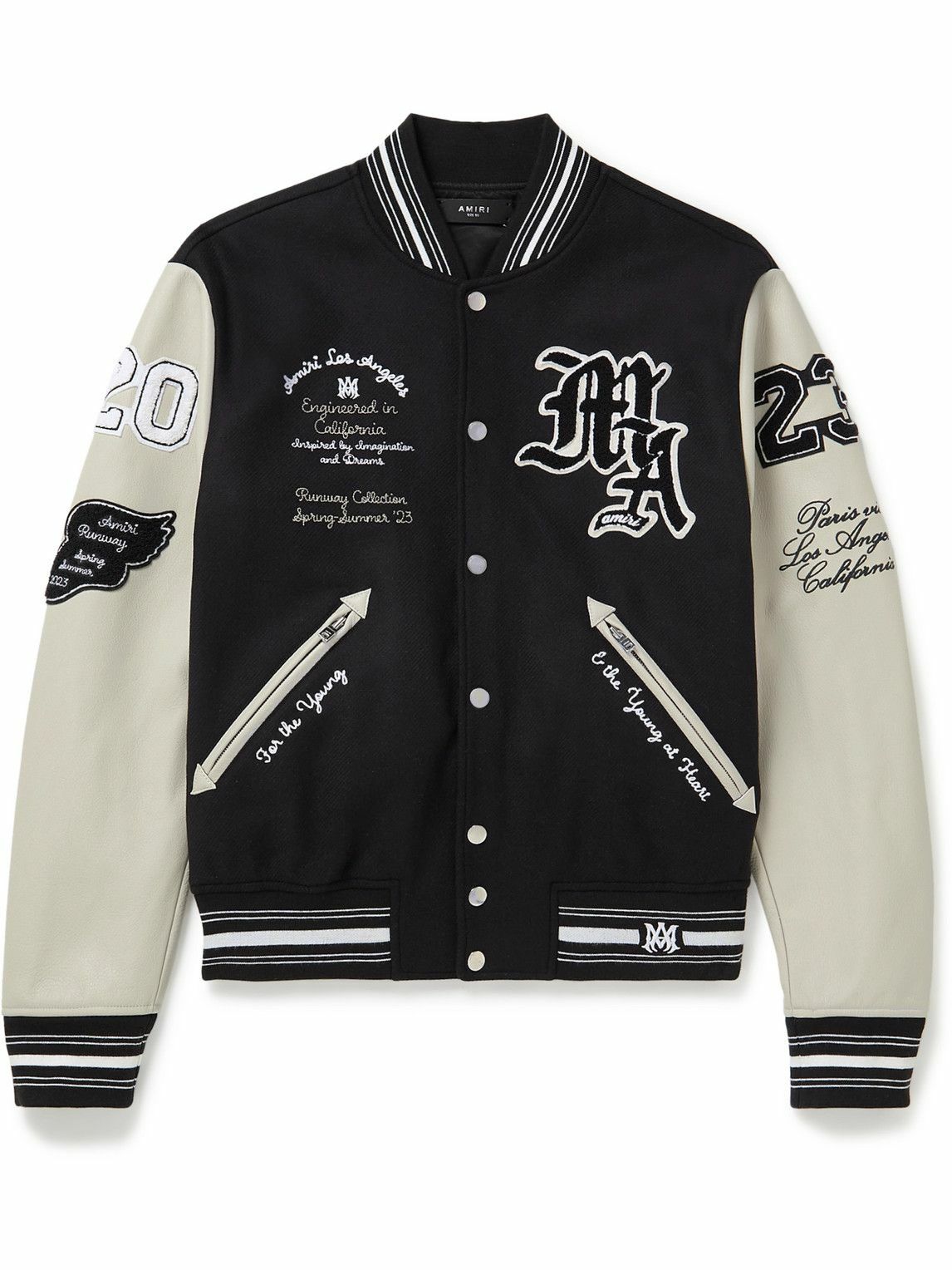
The hoodies and tees are where the gap between the tag and normal habits is widest. Core jersey calls for professional dry cleaning, and since the MA Core Logo Hoodie is entirely cotton and made in the United States, heat will leave it shrunken and misshapen. Should you launder a jersey piece at home against the tag, the least destructive route available is cold water, inside out, a gentle cycle and no dryer. Applied graphics, chenille patches and embroidery fail first, and they fail from friction and heat rather than from soap. Dry flat rather than on a hanger, because a wet heavyweight hoodie stretches through the shoulders under its own weight. Both fleece and knit pill with wear, and a comb or fabric shaver, used gently, brings the surface back without thinning it.
Storage, Rotation and Travel
Most avoidable damage happens during storage, and correcting it is free. Either hang denim by the waistband on a clip hanger or fold it along creases already set, and keep repaired panels flat rather than bent over a bar. Separate dark from light in the wardrobe: the dye transfer warning on core denim applies just as much to whatever hangs beside it. Air and space are what leather needs: a compressed garment bag holds moisture against the surface and encourages mould wherever the air is humid. Rotate rather than wear one pair daily, as fibres with elastane content need time to recover their shape. Travel calls for rolled jersey, folded denim and footwear in its own bag, with the sole isolated from everything else.
The Short Version, and When to Hand It Over
The table condenses everything above into the shortest usable form, naming the material, the instruction that carries the most weight, and the mistake that does the most damage. Where the brand’s own tag specifies something, that instruction takes precedence over the general practice listed here. No line here is a laboratory result, and none of it comes out of a brand-published care manual, since no such document could be located. What you have here are conservative choices, and for hand-finished garments the conservative bias is usually the right one.
| Material type | Primary instruction | Commonest error |
|---|---|---|
| Core distressed denim | Spot clean only, cold, air dry | Machine washing or tumble drying |
| Inserted leather on denim | Condition the panel on its own and keep it dry | Soaking panel and garment together |
| Core jersey cotton | Professional dry cleaning per the tag | Hot wash, then a hanger while wet |
| Smooth leather and suede | Brush and reshape, with cream on smooth leather only | Conditioning suede or drying near heat |
| Leather uppers on sneakers | A damp cloth plus a soft brush | Putting them through a machine |
There is a point at which doing nothing is the skilled response. Structural damage through a repaired panel, a torn leather insert, a failed seam under a stud field or a stain set into distressed denim all need a specialist, and so does anything involving solvent, dye or heat. The brand does provide an after-sales and repair service, though on narrow terms: case-by-case assistance, limited to products purchased from its own site, with repair fees possible. If the purchase was secondhand, plan on a private specialist, and any good denim or leather atelier will quote before working. Clean less, air more, repair early, and keep heat away from all of it.